


Thinking about breastfeeding?
Most pregnant women say they would like to give breastfeeding a go.
With the right help and support, approximately 97% of women will be able to breastfeed their baby.
Some amazing things about breastfeeding and your (human) milk
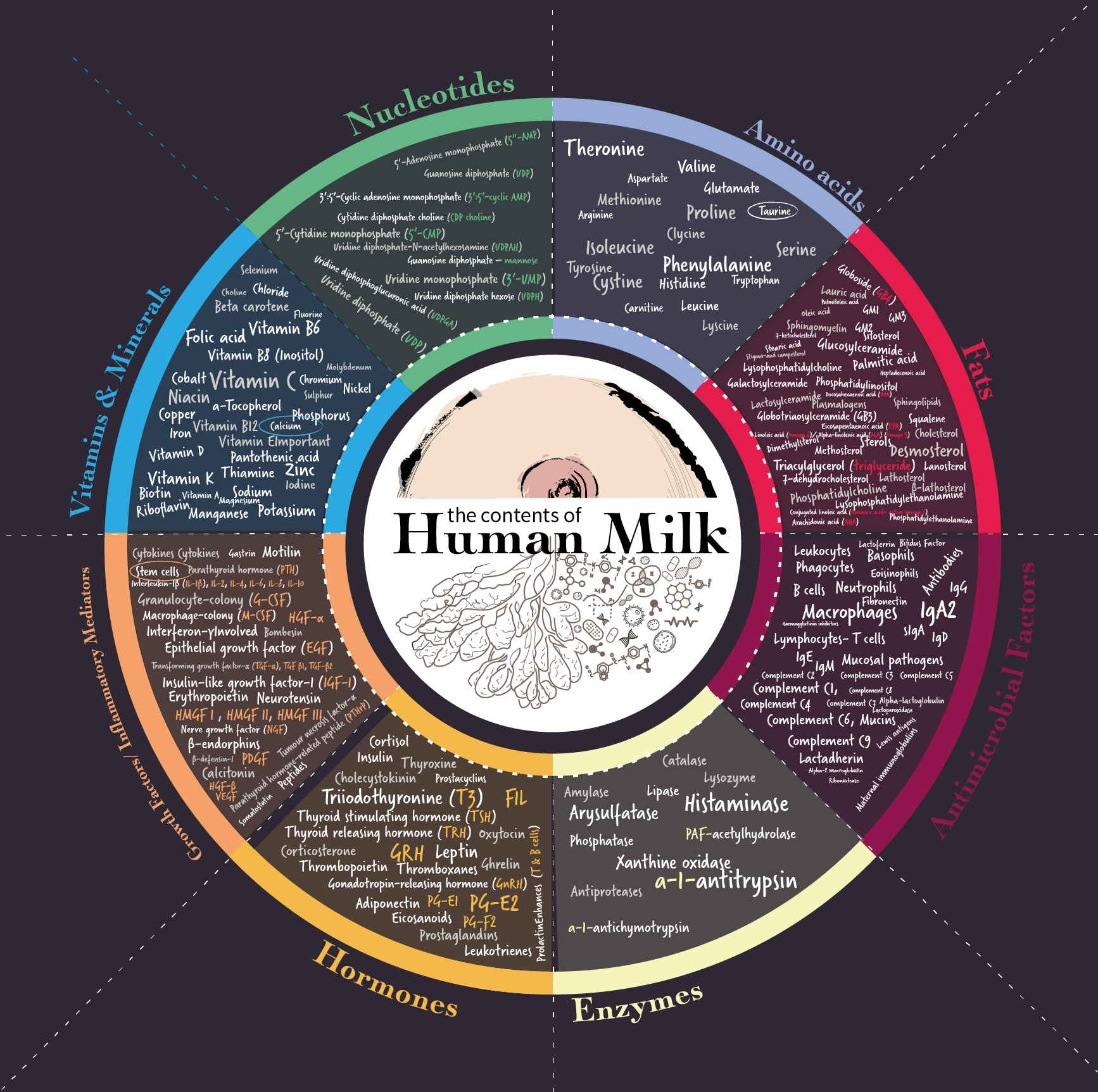
Breastmilk has some absolutely wonderful health-giving properties that help build and protect babies’ immune system, reduce the risks of some illnesses and allergies, and has many other qualities which support your baby’s development. There are so many things in your milk that are specially made by your body for your baby, and it is changing all the time to meet your baby’s needs. You can find out more by looking at this incredible image of breast milk composition from the Human Milk Foundation.
Watch this amazing film to find out more.
You may be interested in exploring the research evidence from the UNICEF UK Baby Friendly Initiative
All mammals drink the milk their mothers make, especially for them, which enables them to develop a strong immune system and provides all the drink and food their young will need and human babies are just the same.
More information
Early days with your new baby and feeding
Do you know how small your new baby’s tummy is?

- Day one – size of a cherry 5-7ml or 0.2oz
- Day three – size of a walnut 22-27ml or 0.75-1oz
- One week – size of an apricot 45-60ml or 1.5-3oz
- One month – size of a large egg 80-150ml or 2.5-5oz
This means that your baby will need to feed little and often.
Keeping your baby close will help you get to know one another. It can take time to get into a rhythm together, so having skin to skin contact often will help establish breastfeeding.
Your baby's suckling reflex

Suckling can have some amazing benefits for a little baby. From the baby’s perspective – being born is really hard work and the baby’s head is quite squeezed during the birth process. Luckily nature has designed us to have very soft bones in our skulls so our heads can mold, or shape to fit through the birth canal. A ‘normal’ birth causes the head to be squeezed quite a lot, so even normal birth can be intense and sometimes difficult for the baby. If you have had an ‘instrumental delivery’ – a forceps, ventouse or caesarean section, your baby may have experienced a greater deal of compression or intense sensation to their head. (Please note – this is rarely harmful as babies are designed to have head compression at birth – but it is probably a bit uncomfortable for a few days!)
There is a tiny thin bone leading from the roof of the baby’s mouth, and which lines up behind their nose, connecting to the bones of the skull, one on top of another.
When the baby suckles, this thin, tiny bone, called the vomer, gently ‘rocks’ the next bone it connects with, which in turn gently rocks the next, so gently rocking the bones of the skull to make them feel more comfortable and aligned.
You can watch the film below to find out more about this.
Although suckling is best recognised as a feeding cue, or a sign to say – ’mm I’m ready for a feed now’, sometimes babies may suckle more frequently to soothe the tenderness in their heads and help the bones in their skull get back into better alignment.
Follow your new baby’s signs to suckle and always offer the breast if you are breastfeeding. The suckling will sooth baby and stimulate your milk supply. Your baby will tell you they are not ready for a breastfeed by giving disengagement cues, closing their mouth or turning their head a way.
This film describes some of the feeding cues
If you have had an instrumental delivery and are bottle feeding your baby, you may consider using a soother or dummy if your baby is needing to suckle but is not hungry. Discuss this with your health visitor or midwife.
Suckling and breastfeeding
Although new babies are born with a ‘suckling’ reflex, birth can make the baby’s head feel a bit tender so they may not feel like opening their mouths wide to learn to latch on to the breast.
Some new babies may need a little help learning to latch on to the breast – although they can suckle from the beginning. Sometimes they need to learn to open their mouth wide to latch on to the breast for a breastfeed. It may take a few days for a baby to feel like doing this after birth.
A baby who has had an instrumental birth or cesarian, or may have had some other complications, may feel even less like opening their mouth wide for a breast feed. With support and time the baby is able to learn to have a deep open mouth for a breast feed.
Ask your health professional (midwife, health visitor or any other professional) who your nearest breastfeeding support service is and get in touch with them before your baby is born, so you have all the knowledge and support you need to get off to a good start with breastfeeding.
How does my body make milk
Your body starts to make colostrum (first milk) even when you’re still pregnant. Once baby is born, hormonal changes help the milk to flow. Some women hand express their colostrum at the end of pregnancy to help ‘prime’ their breasts and store some milk in case baby needs it.
Check out this leaflet from the Association of Breastfeeding Mothers about antenatal hand expressing and chat with your midwife if you’re interested in doing it. Expressing your milk before your baby arrives – ABM

‘From Colustrum to Breastmilk’ by Amanda44 used under CC 3.0 Licence
Feeding your baby frequently during the first few days helps to stimulate the next stage of milk production. This picture shows what your milk will look like during the first month of feeding, starting off very thick and yellow changing to thinner and whiter milk. It is normal for milk to have tinges of different colours depending on what you eat – all mother’s milk is individually made for each baby.
Noticing baby’s feeding cues and offering the breast whenever they are asking, enables your body to make just the right amount of milk for them. Feeding is part of the relationship you are building with your baby. How clever!
For some women, making breastmilk can be straightforward, for others it can take time, a few weeks. Every mother is different, so having support is important – whether this is from a professional, another breastfeeding mother, or your family if they feel confident with breastfeeding. Others can help by providing you with food and comfort, to enable you to get your milk supply established and build your relationship together.
- This leaflet from Unicef UK gives you clear information to help you breastfeed your new baby.
- This is a fun cartoon around making milk from the ABM.
Dads, other partners and carers


Everyone close to the baby needs to build a relationship together – brothers, sisters, and other adults. For breastfeeding to become established the mother must be supported to have the baby close when possible. Others can support with baths, cuddles, skin-to-skin and learning baby’s cues as they develop and grow. Dads/other parents or carers are a very important part of the family. The best support a partner can give to the breastfeeding mother is being there and reassuring her, ensuring that you know where to go for breastfeeding support, and building your relationship all together- and bringing lovely food and drinks.
Feeding your baby